News
Here’s some recent news for the Bhattacharya Lab!
2026
Our paper, Quantification method affects replicability of eQTL analysis, colocalization and TWAS, is published in Nature Genetics! Led by Taylor and Sean, with Yung-Han, Vihan, Nolan Cole, and William Wu. Congrats, team!

The lab had a great time at the 2026 Annual Meeting of the American Society of Human Genetics in Montréal! Charis, Aryun, Taylor, Yung-Han, and Sean all presented posters on our latest work.
Sean’s paper, Natural variation in transplacental transfer efficiency exposes distinct transcriptional network architectures of PFAS effects on birth weight and gestational age, is published in Environmental Health Perspectives. Thanks to the Huang Lab and all our collaborators. Congrats, Sean!
Our NIEHS R21 (ES039048), “Identifying PFAS-Induced Disruption of Placental Imprinting and Neurodevelopment Through Multi-Omic Negative Control Calibration,” has been funded! This project builds on our placental genomics work to understand how PFAS exposures disrupt placental imprinting and downstream neurodevelopment.
Check out ICONIC, our new R package for integrating instrumental variable- and negative-control-informed causal discovery and diagnostics in multiomic studies. Led by Sean with Charis, Taylor, and Yung-Han, in collaboration with the Huang Lab.
Arjun gave an invited talk at the Joint Statistical Meetings in Boston on opportunities and advancements in integrating long- and short-read RNA-seq across differential expression analysis, QTL mapping, and outcome prediction.
Our collaborative paper with the Sieh Lab and Kaiser Permanente, Comparative 10-year performance of mammography artificial intelligence, polygenic, and clinical breast cancer risk models in the Kaiser Permanente Research Bank, is published in the Journal of the National Cancer Institute. Congrats to the team, including Taylor!
Sean’s paper, Long-read assembly reveals vast transcriptional complexity in the placenta associated with metabolic and endocrine function, is published in Nature Communications! Thanks to our collaborators in the Huang Lab and beyond. Congrats, Sean!
We are welcoming two new undergraduate researchers: Charis Xiong, studying statistics and data science at Rice University, and Vihan Shah, studying human biology at UCSD.
Two new preprints from the lab are out on bioRxiv:
Arjun gave an invited talk, “Splicing-resolved genomics for precision women’s health across populations,” at the Lunenfeld-Tanenbaum Research Institute at the University of Toronto.
2025
Our collaborative preprint with the Sieh Lab on a cell-type aware transcriptome-wide association study of mammographic density phenotypes is now on medRxiv. Congrats to the team, including Taylor and Yung-Han!
Arjun visited the Institute for Molecular Medicine Finland (FIMM), HiLIFE at the University of Helsinki, to talk about discovering novel isoform regulation in complex diseases by integrating long- and short-read RNA-sequencing.

Yung-Han’s new preprint, co-advised with Ryan Sun, develops formal statistical replication analyses for lung cancer genome-wide association studies. Read it on medRxiv!
Arjun has joined the editorial board of PLOS Genetics as an Academic Editor.
Our new preprint, led by Taylor and Sean, shows that the RNA-seq quantification method you choose changes the replicability of eQTL mapping, colocalization, and TWAS. Read it on bioRxiv!
Yung-Han and Taylor’s paper, Isoform-level analyses of 6 cancers uncover extensive genetic risk mechanisms undetected at the gene-level, is published in the British Journal of Cancer as part of the Emerging Leaders in Cancer special edition, for which Arjun was named an Emerging Leader. Congrats, Yung-Han and Taylor!
Arjun presented our isoform-level work on cancer risk mechanisms at the Novel Statistical Approaches for Studying Multi-omics Data workshop at the Banff International Research Station.
Arjun gave a state-of-the-art plenary talk, “Integrating Environment, Gene Expression, & Computational Models to Identify Modifiable Pathways Across Diverse Populations,” at the Pediatric Academic Societies 2025 Annual Meeting.
The lab has received an MD Anderson Cancer Center Support Grant (CCSG) New Faculty Award to support our ongoing work in computational genomics for cancer.
2024
Arjun returned to Chapel Hill to give an invited talk on isoform-specific analyses to uncover hidden cancer risk mechanisms at the UNC Department of Biostatistics 75th Anniversary Celebration. Go Heels!
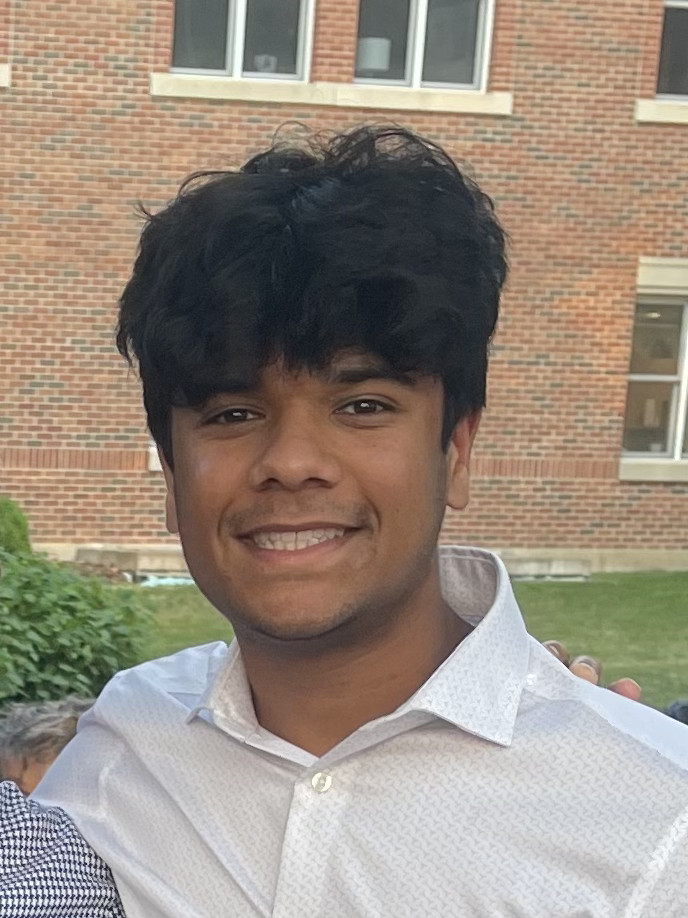
We are welcoming Aryun Nemani, an undergraduate at Rice University studying biology and data science, to the lab! Read more about him here.
Our NCI R21 (CA293419), “Alternative splicing and isoform expression as mediators for the genetic etiology of breast cancer,” has been funded! This project will use long- and short-read RNA-seq to understand how isoform-level regulation links germline genetics to breast cancer risk.
Arjun has received a UT Rising STARs Award from the University of Texas System, supporting the lab’s work in computational genomics. Thank you to the UT System and MD Anderson for the support!
Two collaborative PsychENCODE papers are out! The cross-ancestry atlas of gene, isoform, and splicing regulation in the developing human brain is published in Science, and our work on brain cell-type shifts in Alzheimer’s disease, autism, and schizophrenia is published in Science Advances. Congratulations to the Gandal Lab and all our collaborators!
We are welcoming Dr. Taylor Head to MD Anderson, who recently completed her PhD in Biostatistics at Emory University. She will be joining as a Postdoctoral Scholar. Read more about her here.
We are welcoming Dr. Sean Bresnahan to MD Anderson, who recently completed his PhD in Molecular, Cellular, and Integrative Biosciences at Penn State. He joins us to study transcriptomics and functional genomics at the maternal-offspring interface. Read more about him here.
2023
Check out our isoTWAS manuscript, published at Nature Genetics. Thanks to a great collabroation with the Pasaniuc and Gandal Labs! Our software is available here.
The Bhattacharya Lab for Computational Genomics at the MD Anderson Cancer Center’s Department of Epidemiology opens its door. Email Arjun if you’re interested in our work or want to join us!
Yung-Han will be presenting a poster on factors influencing portability of gene expression prediction models across genetic ancestry at 2023 Annual Meeting of the American Society of Human Genetics. Come see her work in DC in December!
Arjun will be presenting on alternative isoform expression as a potential mechanism in identifying disease mechanisms at 2023 Annual Meeting of the American College of Neuropsychopharmacology as a part of the Translating Insights from Postmortem Brain Studies into Knowledge of Disease Mechanisms and Novel Treatment Strategies panel! Come see our work in Tampa in December!
Check out our isoTWAS manuscript, updated on medRxiv, with increased functionality in our R package, greatly expanded sample sizes for our empirical analyses, and a larger number of complex traits studied.